Budget PC vs. High-End Rig: We Gamed Hard on Both So You Know Where Your Money Actually Goes
There's a conversation that happens in every gaming community, every Discord server, every Reddit thread where someone posts their first PC build: do I really need to spend that much? The enthusiasts say yes. The budget warriors say absolutely not. We got tired of the debate, so we settled it the only way that makes sense — by actually playing games on both setups and measuring what happens.
We built two systems. One came in around $800. The other crossed the $1,300 mark. Both were pushed through 10 popular titles at Ultra settings, and we tracked frame rates, frame times, and the kind of qualitative stuff that benchmarks alone can't capture. What we found should save a lot of American gamers a whole lot of money — or at least help you spend it in the right places.
The Two Builds, Side by Side
The budget rig ran an AMD Ryzen 5 7600 paired with an RX 7700 XT and 16GB of DDR5 RAM. Nothing flashy. The kind of build you can put together right now without hunting for deals or waiting on sales.
The high-end system stepped up to a Ryzen 7 7700X, an RTX 4070 Super, and 32GB of DDR5. Still not bleeding-edge — we weren't comparing a $800 build to a $3,000 workstation. The $500 gap between these two is where most real purchasing decisions happen, and that's exactly the range we wanted to examine.
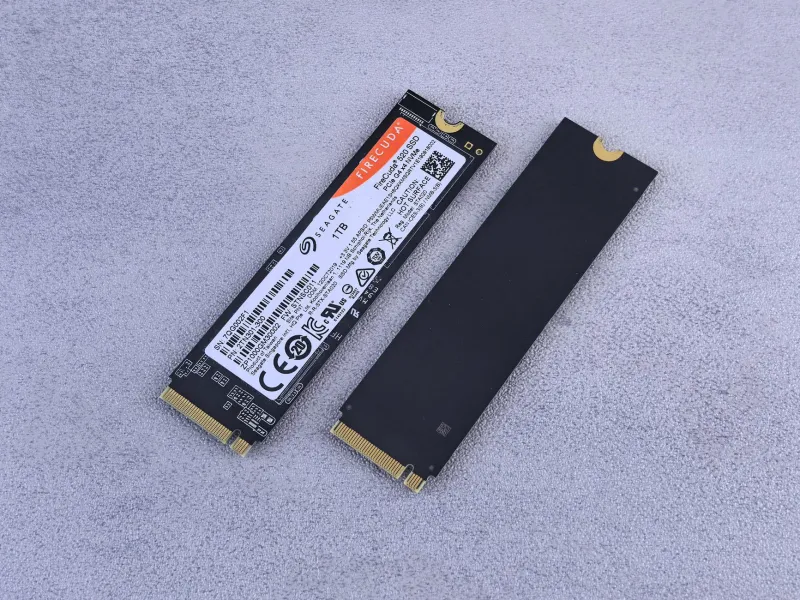
Both machines used the same 1440p monitor, the same SSD, and the same Windows 11 install with identical driver versions. No variables we couldn't control.
The Games We Tested
We kept the library realistic — titles people are actually playing right now, not synthetic benchmarks designed to make GPUs sweat. The list included Cyberpunk 2077, Baldur's Gate 3, Call of Duty: Warzone, Fortnite, Hogwarts Legacy, Star Wars Jedi: Survivor, The Last of Us Part I, Alan Wake 2, Elden Ring, and Helldivers 2.
Each game was tested at 1440p with Ultra or equivalent maximum settings. Ray tracing was enabled where the game supported it natively without upscaling tricks.
Where the Budget Build Absolutely Keeps Up
Here's the part that'll raise some eyebrows. In six out of ten games, the performance gap between the two rigs was genuinely small. We're talking 8 to 15 frames per second in average frame rate — a difference that, in motion, most people won't notice without a frame counter on screen.
Fortnite and Warzone both ran beautifully on the budget machine. Both titles are well-optimized and don't demand the kind of raw GPU throughput that makes the 4070 Super earn its paycheck. The budget rig averaged around 110fps in Fortnite at Ultra. The high-end machine averaged 128fps. That's a real difference on paper, but at 1440p on a 144Hz display, both setups feel smooth and responsive.
Elden Ring told a similar story. The game's engine doesn't scale dramatically with GPU power at 1440p, and both builds hit the game's internal frame cap with ease. Baldur's Gate 3 leaned more on the CPU for its turn-based logic, and the Ryzen 5 handled it without complaint.
Bottom line: for competitive shooters, well-optimized RPGs, and titles that aren't graphically extreme, the budget build delivers an experience that's genuinely hard to distinguish from its pricier sibling.
Where the Extra Money Starts Earning Its Keep
Then there are the games that exposed the gap.
Alan Wake 2 with ray tracing enabled is basically a stress test wearing a trench coat. The budget RX 7700 XT averaged around 38fps at Ultra with full RT — playable, technically, but not comfortable. The RTX 4070 Super climbed to 61fps in the same conditions, and with DLSS Quality mode enabled, that number jumped to 82fps. AMD's FSR helped the budget card too, but the image quality and performance ceiling simply aren't the same.
The Last of Us Part I and Cyberpunk 2077 with path tracing showed similar patterns. These are games where the high-end GPU doesn't just edge ahead — it opens up a noticeably different experience. Smoother, more stable, with less frame time variance in the scenes that push the hardware hardest.
Hogwarts Legacy sat somewhere in the middle. The budget build averaged around 55fps in demanding outdoor areas. The high-end rig averaged 74fps. Both feel playable, but if you're chasing that locked 60fps experience without touching the settings, the cheaper build will occasionally dip below the line in ways that register as a stutter.
The Frame Time Story Nobody Talks About
Average FPS is only half the picture. We also tracked frame times — the consistency of delivery between frames — because a game averaging 60fps with wild swings between 10ms and 40ms feels nothing like a game holding a steady 16ms.
The high-end build showed tighter frame time consistency across the board, particularly in open-world games where background streaming taxes both the GPU and CPU simultaneously. Cyberpunk 2077 driving through Night City was the clearest example: the budget build averaged similar frame rates in lighter areas but showed more pronounced hitches during dense urban traversal.
This matters more than the raw FPS number for a lot of gamers. Stutters are jarring in a way that a lower-but-stable frame rate simply isn't.
So What's the Verdict?
If you're gaming at 1440p on a 144Hz monitor and your library leans toward competitive titles, well-optimized games, or anything that's not trying to melt your GPU with ray tracing, the $800 build delivers roughly 85% of the high-end experience. That's not a knock on the budget rig — that's actually impressive.
But if you want to push graphical fidelity to its ceiling, play the most demanding titles without compromise, or future-proof your setup against the next wave of releases, that extra $500 does real work. It's not a scam. It's just not as dramatic as the spec sheets make it look.
The smartest play for most US gamers right now? Build or buy in the $800 to $900 range, and put the savings toward a better monitor or a faster SSD. You'll feel the difference from those upgrades more than you'll feel the GPU gap in your day-to-day gaming.
And if you do want to spend more? Wait for a sale on the 4070 Super or check the refurbished market. The performance is there — you just don't have to pay full retail to get it.